
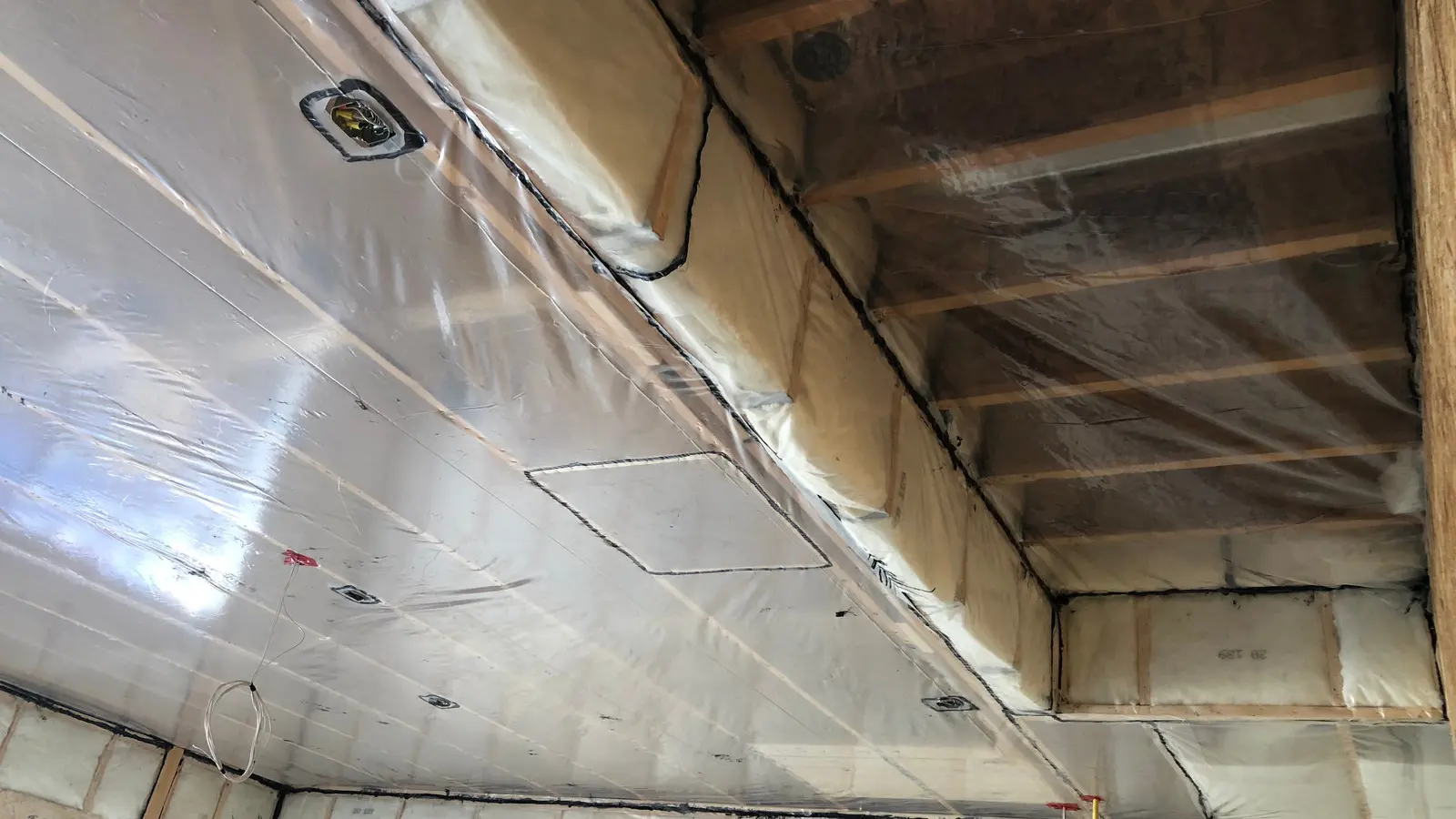
The cost of spray foam insulation in Saskatoon comes down to how many inches go on, over how much area, and how much preparation the space needs first. A rim joist in a tidy basement is a half-day job; a steel-clad shop or a crawl space full of old batts is a different quote, even at the same square footage.
That is why we don't publish a single price per square foot. This guide explains what moves the number so you can read a spray foam quote properly and compare two contractors on the same terms.
Why a Per-Square-Foot Price Rarely Holds
Search for spray foam pricing and you will find plenty of per-square-foot figures. Most come from other markets, many are out of date, and every one of them assumes a thickness, a surface and an amount of prep that may have nothing to do with your building.
Spray foam is priced by volume, not area
Two quotes for "1,000 square feet of spray foam" can be completely different jobs. One inch of foam and three inches of foam cover the same area, but the second uses three times the material and takes longer to apply.
Installers often talk in board feet for this reason: one square foot, one inch thick. If a quote gives you an area but no thickness, you cannot compare it with anything.
Thickness is set by the assembly
The right thickness depends on what the foam has to do. At a rim joist it needs to control vapour as well as heat. On a shop wall or under a roof deck the target is different again. We set thickness from the assembly and what sits behind it, rather than applying one default everywhere.
The surface has to be ready
Closed-cell foam must bond to a clean, dry, solid surface. If old batts, loose fill or damp material are in the way, they come out first, and that removal is part of the price.
Want an actual number for your building? Call us at (306) 880-2878 or send photos for a free consultation. A specialist will reach out, and we measure before we quote.
Want a specialist to look at it?
Send us photos and a specialist will reach out. If an on-site consultation is needed, they will let you know.
The Five Things That Set the Price
Every spray foam quote in Saskatoon comes down to the same short list. Knowing it lets you predict roughly where your project sits before anyone arrives.
1. Thickness specified
Material is the biggest line on a foam quote, and thickness multiplies it. Natural Resources Canada publishes the Keeping the Heat In guide for Canadian homeowners. It notes that closed-cell foam is sprayed "in layers not more than 50 mm (2 in.) thick at each pass." Deeper specifications mean more passes, more material and more time on site.
2. Total area
Larger, continuous areas cost less per square foot than small, scattered ones. Setting up the rig, heating the hoses and masking the space take roughly the same effort whether the job is a few rim joist bays or a whole wall.
3. Preparation
Masking windows, floors and anything that must stay clean is part of every job. Removing old insulation, correcting moisture, or cleaning a dusty steel surface so the foam bonds adds to it.
4. Access and headroom
Tight crawl spaces, high shop ceilings that need a lift, and cramped attics all slow a crew down. A rim joist behind a finished ceiling costs more to reach than one in an open basement.
5. Building type
Wood framing, steel cladding and concrete each detail differently. Steel buildings need clean, dry panels and careful work around purlins and girts; concrete foundation walls need the right surface condition before foam goes on.
Closed-Cell vs Open-Cell: Why the Prices Differ
Both are spray polyurethane foam (SPF), but they are different products at different prices.
Closed-cell foam
Closed-cell is the dense, rigid product. The NRCan guide lists its design value at R-6 per inch. It says the foam "can be used as an air barrier" and, at 50 mm, "can sometimes act as a vapour barrier". The guide also describes it as a "premium, hard textured, multi-task product" that is not generally used to fill whole cavities "due to its high cost."
That is the honest trade-off. You pay more per inch, and in exchange one product does the job of the insulation, the air barrier and, where the specifications support it, the vapour barrier.
Open-cell foam
Open-cell is lighter and expands far more. NRCan notes its "lower comparative cost." It can be an air barrier "but not a vapour barrier." It has a place inside a conditioned space, especially where sound absorption matters more than vapour control.
For exterior walls, rim joists and crawl spaces in a Saskatchewan winter, closed-cell is what we usually specify, because vapour control matters through a long heating season. A cheaper open-cell quote for the same exterior wall is not a like-for-like price.
Typical Saskatoon Jobs and What Drives Each
These are the projects we quote most often, with the factor that moves each price the most.
| Job | Typical time on site | What moves the price most |
|---|---|---|
| Basement rim joist | Half a day | Number of bays and whether the ceiling is finished |
| Crawl space | About a day | Access, headroom and old material to remove |
| Full wall assembly | One to three days | Area and the thickness specified |
| Steel-clad shop | Two to four days | Building size, surface prep and lift access |
Rim joists
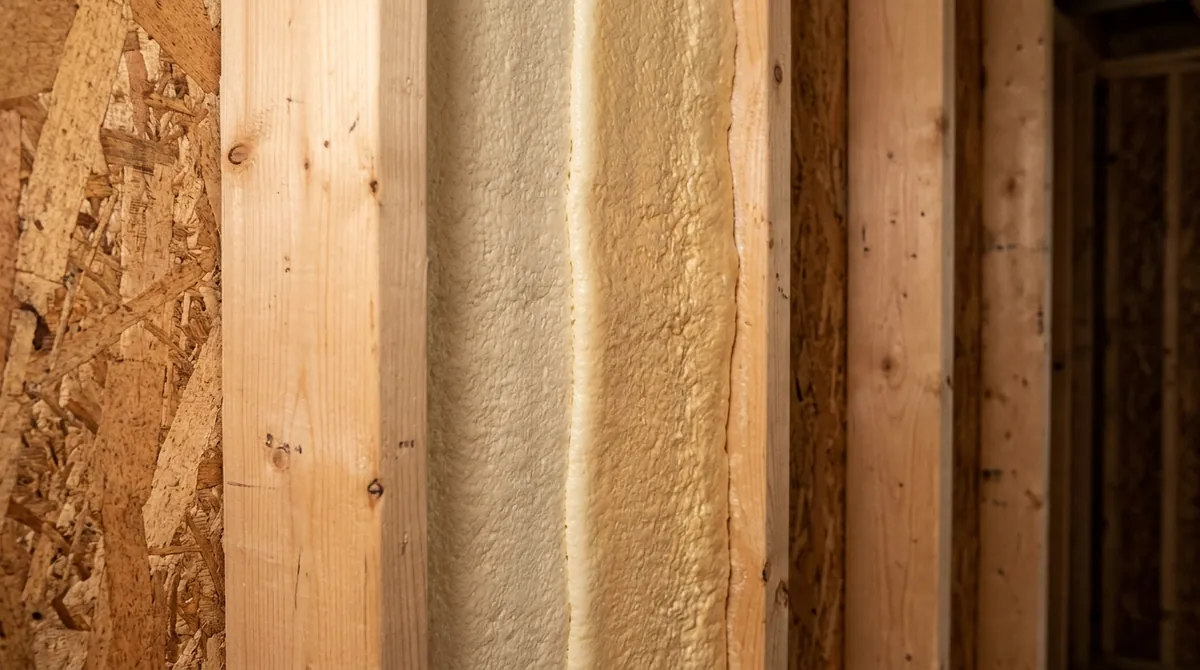
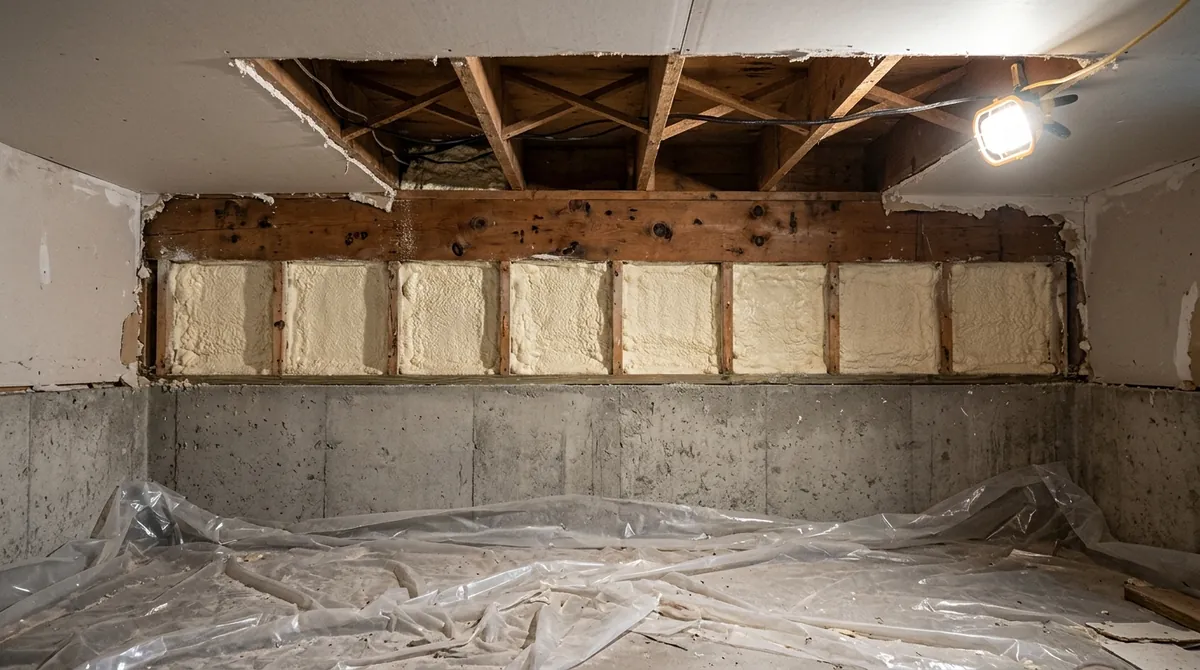
The rim joist is where the floor framing sits on the foundation, and it is one of the leakiest spots in a Saskatoon house. It is also one of the best-value places for closed-cell foam, because no other product seals those irregular bays as well. Cold drafts along the floor and frost on the inside of the wall are the usual signs.
Crawl spaces
The foam itself is not the expensive part here. Access is. A crawl space with good headroom and nothing to remove is a straightforward day. One with eighteen inches of clearance and wet batts on the floor takes longer.
Shops, garages and farm buildings
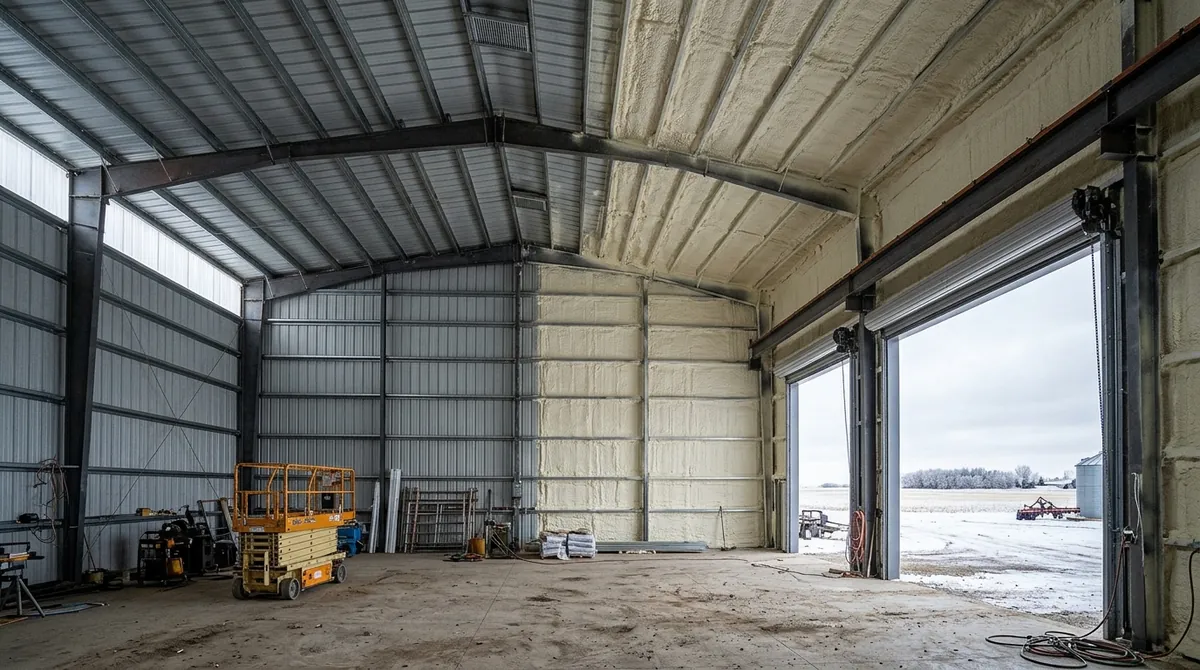
Steel-clad buildings around Saskatoon, Warman and Martensville are classic spray foam work: batts sag in the frame and leave an open air path behind them. Price follows the size of the building, the height of the walls and how much cleaning the steel needs. Larger commercial projects are covered under commercial spray foam.
What a Proper Spray Foam Quote Should State
If you are comparing two contractors, compare scopes rather than totals. A lower number often means a thinner or smaller job.
A quote worth trusting states
- The product, and whether it is closed-cell or open-cell
- The thickness in each area, not one number for the whole job
- The area covered, so you can work out the volume
- What preparation and removal is included
- How the space will be ventilated and when you can use it again
- Whether trimming and cleanup are included
Warning signs:
- A price given from a phone call without photos or measurements
- An area with no thickness attached
- Open-cell quoted for an exterior wall with no mention of vapour control
- A rebate amount promised as a certainty
If two quotes list different thicknesses for the same wall, ask each contractor why. A good answer names the assembly, the vapour control it needs and the product's rating. A vague answer usually means a default thickness applied everywhere.
Rebate programs change, and eligibility depends on your property and often on an assessment before work starts. We point you to the current official program so you can check the terms yourself.
Is Spray Foam Worth the Cost in Saskatoon?
Product quality affects the long-term cost
Two closed-cell foams can be quoted at similar prices and perform very differently ten years later.
MAGNUS has installed thousands of spray foam projects since 2008, across several manufacturers. That experience taught us that not all foams hold up equally. We prioritise premium products judged on dimensional stability, adhesion, low water absorption and low permeability, and we are factory-certified applicators for Elastochem Insulthane 200 and BASF Walltite V3.
A cheaper foam that shrinks away from the framing leaves the air gaps you paid to close. It is worth asking any contractor which product they use and why.
Worth it in the right places
In most cases yes, in the right places. Saskatoon swings from plus thirty to minus forty-five Celsius in a year, and air moving through an unsealed cavity carries heat with it every time. Foam stops that air and insulates in one pass, which is what justifies the higher price per square foot.
It is not the right answer everywhere. Interior walls and open basement stud bays are often better value with batts and a well-sealed vapour barrier. Our spray foam vs batt insulation guide goes through which material suits which part of a building.
Getting a Real Number for Your Project
With 7,000+ projects completed, we can often tell a lot from photos. Send us pictures of the rim joist, crawl space, wall or shop and a specialist will reach out. If an on-site consultation is needed, they will say so.
Read more about spray foam insulation in Saskatoon, air sealing for older homes, or attic insulation.