
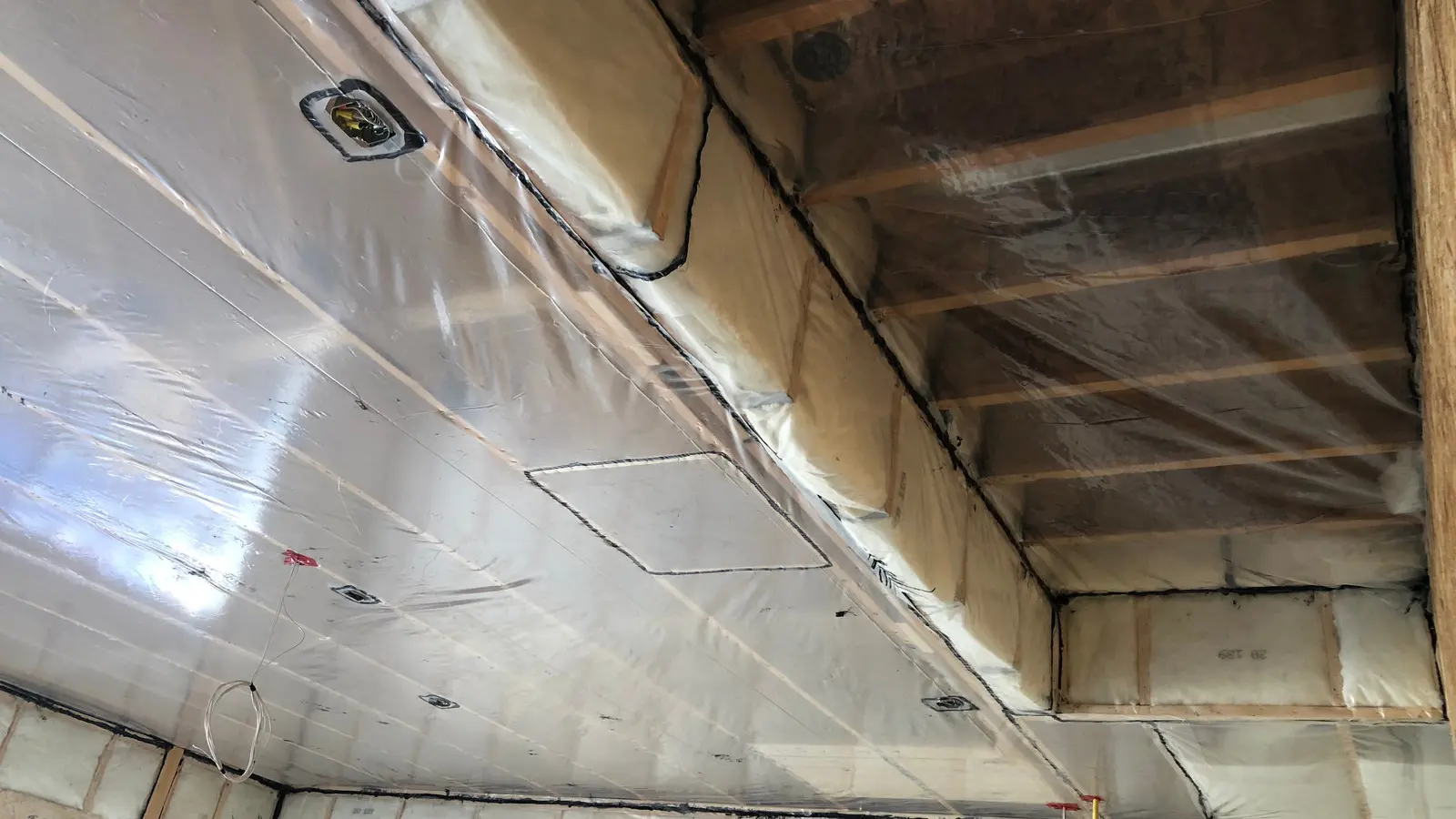
Choose an asbestos removal contractor who tests before recommending removal, puts the scope and the containment plan in writing, and can show you training records, insurance and a WCB clearance letter before the job starts. Those are the documents WorkSafe Saskatchewan tells building owners to ask for, and a contractor who hesitates to produce them is telling you something.
This guide covers what to ask, what a proper job looks like, and the warning signs worth walking away from. It applies whether you own a house in Saskatoon or manage a renovation on a commercial building.
Why the Contractor You Choose Matters
Asbestos is dangerous when its fibres get into the air, and that happens when the material is disturbed. A careless removal turns a stable material into a contamination problem for the whole building.
The risk is in the work, not the material
Intact asbestos-containing material is often safest left alone. The danger starts when someone cuts, sands, scrapes or tears it out without containment. A poor removal can spread fibres through the ductwork and into rooms that were never part of the job, and cleaning that up costs far more than doing the work properly the first time.
Saskatchewan treats it seriously
WorkSafe Saskatchewan's guide to hiring an asbestos abatement company notes that asbestos-related lung diseases are the leading cause of work-related fatalities in the province. Abatement work here is governed by The Occupational Health and Safety Regulations, 2020. They set out how the work must be planned, contained and cleared.
Who carries the risk
The people in the building carry the risk of a bad job, not only the crew. Fibres that escape containment settle into carpets, furniture and ductwork, and they can be stirred up again for months. A contractor who cuts corners on containment saves themselves a day and leaves you with the problem.
Found something you think might contain asbestos? Do not disturb it. Call us at (306) 880-2878 or send photos for a free consultation, and a specialist will tell you whether it should be tested.
Want a specialist to look at it?
Send us photos and a specialist will reach out. If an on-site consultation is needed, they will let you know.
Test First: The Step a Good Contractor Will Not Skip
A contractor who quotes removal without a lab result is guessing. Many materials that look suspicious turn out to be clear, and testing is what tells you whether you need abatement at all.
What testing involves
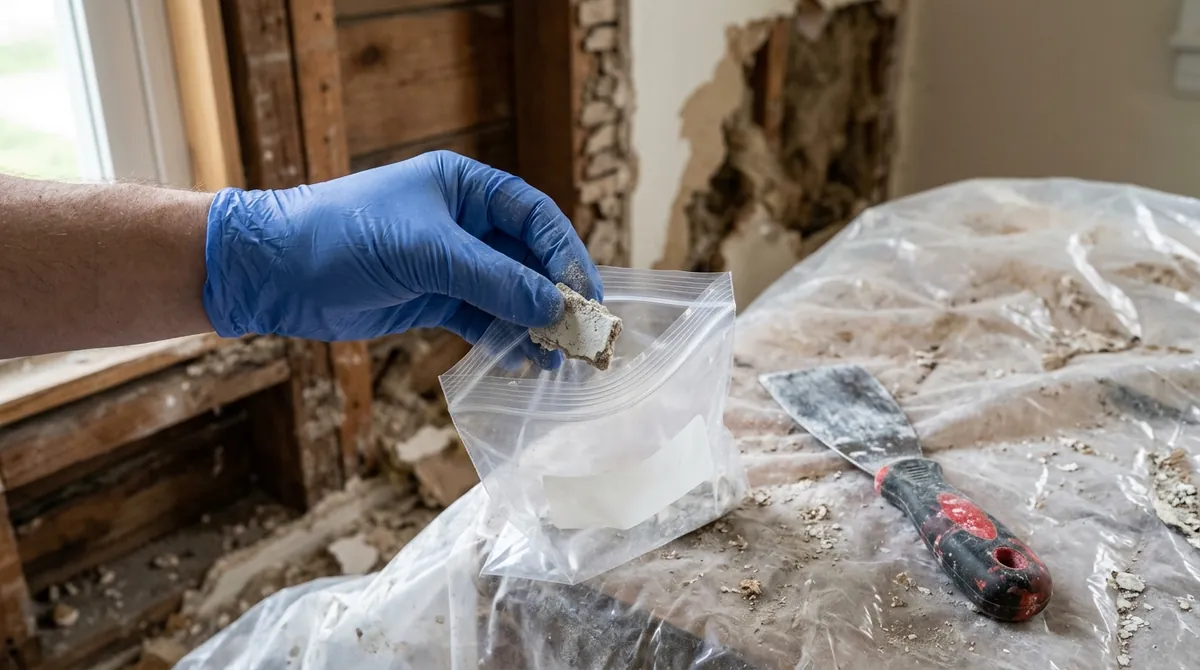
A competent person collects small samples of the suspect material and sends them to an accredited laboratory. Results usually take a few business days. MAGNUS collects samples, coordinates the lab testing and helps you plan the renovation around the results.
Materials worth testing in older Saskatoon buildings
WorkSafe Saskatchewan notes that asbestos was common in buildings built before 1990, and that some non-friable materials made after that may still contain it. In local renovations, the materials we test most often are these.
- Drywall joint compound, even where the board itself is clear
- Vermiculite attic insulation, the grey or silver-brown pebbles
- Textured and popcorn ceilings
- Pipe and duct wrapping
- Older vinyl flooring, nine-inch tiles and the adhesive beneath them
- Plaster, putties and caulking
When testing finds nothing
A clear result is good news, and it is common. It lets the renovation go ahead with normal methods, and it gives you a record to show the next buyer or the next trade. A contractor who is happy to tell you the material is clear is one worth keeping.
The Documents to Ask For Before You Hire
WorkSafe Saskatchewan lists the documentation an abatement contractor should be willing to produce. Ask for all of it, in writing, before you sign anything.
- Required business licences
- Worker training records for the people who will actually be on site
- A WCB clearance letter showing the company is in good standing
- Insurance that covers asbestos exposure. The guide suggests at least $1,000,000 in liability coverage
- An asbestos control plan for your specific job
- Recent references from similar work
- A health and safety program
- The sample testing procedure and the laboratory used for analysis
- Any safety or quality certifications the company holds, such as COR, where applicable
A careful contractor has these ready. If you have to ask twice, or the answer is "we will sort that out later," keep looking.
Why each document matters
The WCB clearance letter matters because an uncovered worker injured on your property can become your problem. Training records show the crew knows how to build containment and decontaminate. The asbestos control plan is the written version of how your job will be done, and it is the document to hold the contractor to if something goes wrong.
Check that the documents match the company you are hiring. If part of the job is subcontracted, ask for the same paperwork from that company too.
Questions That Separate Careful Contractors From Risky Ones
Documents tell you a company exists and is insured. These questions, also drawn from the WorkSafe guide, tell you how the job will actually run.
- How long have you been doing abatement work?
- Do you have enough people and equipment to finish this job on the timeline you are quoting?
- What is the timeline from start to finish, including testing and clearance?
- Who monitors safety on site, and how often is the work area inspected?
- What training and certifications do your workers and supervisors hold?
- Will any of the work be subcontracted? If so, does that company meet the same requirements?
Add two of your own: who will be your contact during the job, and what you will receive in writing when it is finished.
Listen to how they answer
Good answers are specific. A supervisor who checks the containment at the start of every shift tells you more than a promise to take safety seriously. A contractor who explains the process without being asked is usually the one who follows it.
Also ask what happens if they find more than expected. Hidden asbestos behind a wall is common in older buildings, and a clear plan for changes protects your budget and your schedule.
What a Proper Removal Looks Like
You should be able to recognise a well-run job from the outside. The WorkSafe guide describes the core steps, and they match how we run abatement at MAGNUS.
Containment before anything comes out
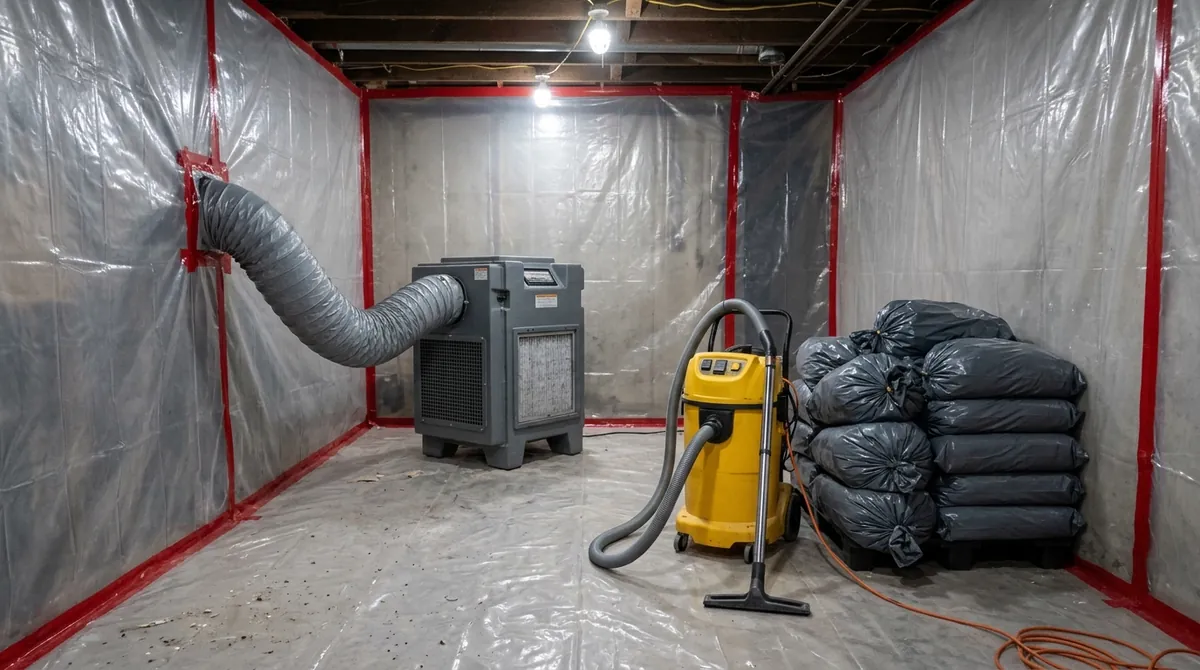
The work area is sealed with heavy polyethylene sheeting, heating and ventilation to the area are shut off, and negative air machines keep air flowing into the containment rather than out of it. Warning signs go up at the entrances, and access is controlled for the length of the job.
Wet removal and double bagging
Material is wetted to keep fibres down, removed, and sealed in two layers of heavy polyethylene bags while still wet. Cleanup uses HEPA vacuums and wet wiping, never dry sweeping.
Documented disposal
Asbestos waste goes to an approved landfill through a controlled waste stream. Ask how disposal is handled and whether you will get a record of it.
Clearance before anyone goes back in
Containment stays up until the area is confirmed clear. On higher-risk jobs, WorkSafe Saskatchewan requires air monitoring to show airborne fibre levels below 0.01 fibres per cubic centimetre before the work area can be entered without respiratory protection. Ask whether your job will be air tested, and who does it.
Warning Signs to Walk Away From
- A removal quote with no testing. Either they are assuming the worst to sell a bigger job, or they are not testing at all.
- No written containment plan. "We will put some plastic up" is not a plan.
- Pressure to start tomorrow. Higher-risk projects in Saskatchewan require the contractor to notify the province 14 days before work begins. A contractor promising to start a large job the next day should explain how they meet that rule.
- Vague disposal. If they cannot tell you where the waste goes, it may not go anywhere approved.
- Cash only, no paperwork. Undocumented removals can also cause questions when you sell the building.
- Advice to do it yourself to save money. Taking a sample yourself is sometimes appropriate with the right precautions. Removing asbestos yourself is a different matter.
Removal is not always the answer
WorkSafe Saskatchewan describes three abatement options: removal, enclosure behind a solid barrier, and encapsulation with a sealant. Material that is intact and out of the way of your project can sometimes be enclosed or left in place under a management plan. A contractor who only ever recommends full removal is not giving you the whole picture.
What Affects the Cost of Asbestos Removal in Saskatoon
Every abatement job is priced on its own scope, which is why we test and look before quoting. A figure given over the phone, before anyone has seen the material, is a guess. These are the factors that move the number.
- The material and where it is. Attic vermiculite, a textured ceiling and pipe wrap each need different methods.
- How much needs to come out. Containment is a fixed cost, so a small removal is not proportionally cheap.
- How complex the containment is. An occupied home or an operating business needs more isolation than an empty building.
- Disposal. Approved waste streams carry their own cost.
- Clearance testing. Required on many jobs before people can return.
Testing is quoted separately and first. It is a small cost compared with discovering asbestos halfway through a renovation, when work stops, removal costs appear and the schedule slips.
Comparing two abatement quotes
Compare scopes, not totals. Check that both quotes cover the same materials and areas, the same containment, disposal and clearance testing. A quote that leaves out air testing or disposal is not cheaper. It is a smaller job, and the missing pieces tend to come back as extras.
Planning a Renovation in an Older Saskatoon Building?
MAGNUS handles asbestos testing, sample collection, lab coordination and contained removal for homes and commercial buildings in Saskatoon and across Saskatchewan, from Warman and Martensville to Prince Albert and Humboldt. If the material is intact and not in the way of your project, we will tell you when leaving it in place is the better answer.
Send us photos of what you have found and a specialist will reach out. If an on-site consultation is needed, they will let you know. Learn more about asbestos testing and removal in Saskatoon, or, if you are a builder planning demolition, our pre-construction testing and abatement page.