
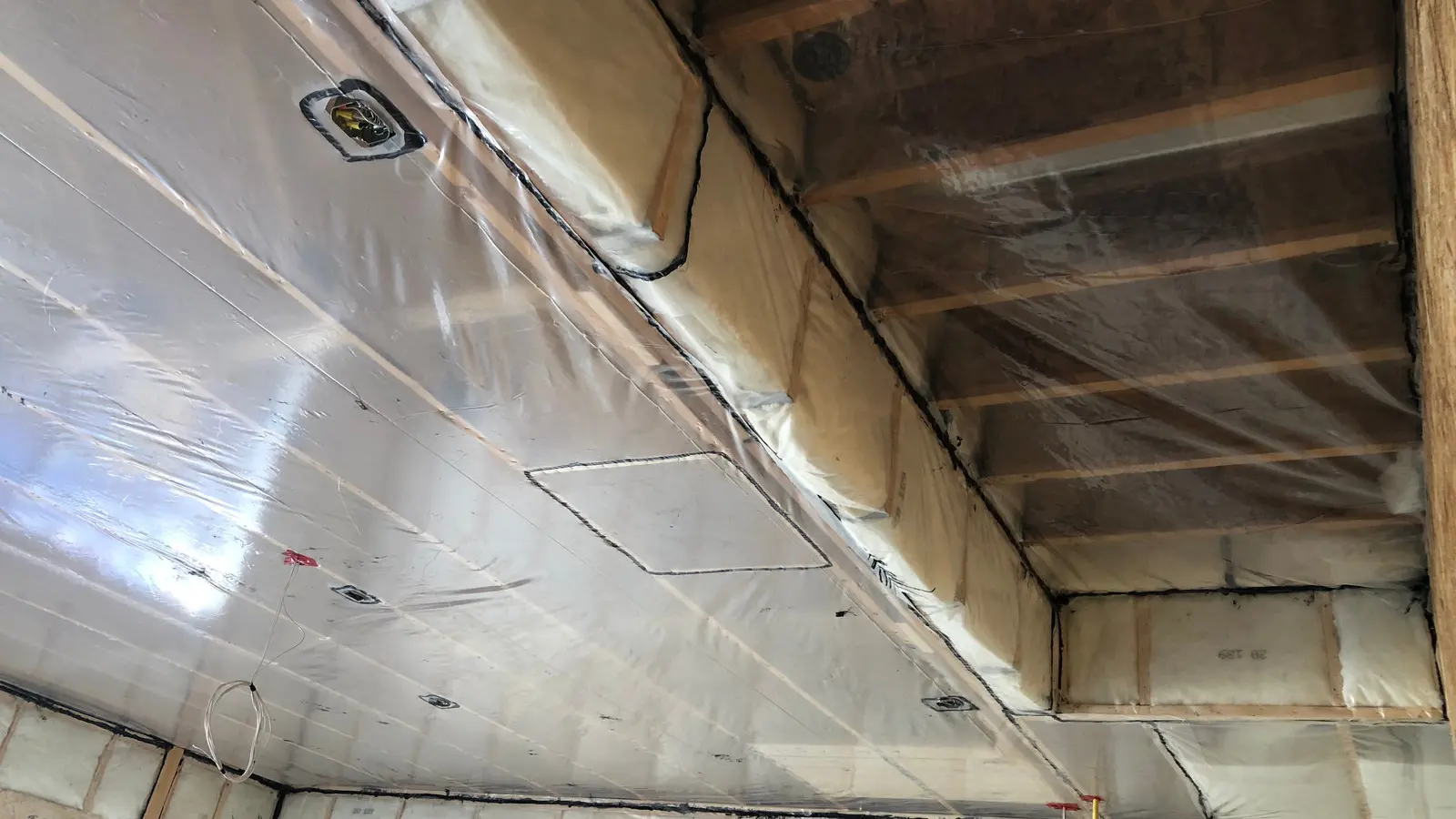
Search for attic insulation pricing and you will find plenty of per-square-foot figures. Most of them are from other markets, most are years old, and none of them know anything about your attic. This guide explains what actually moves the number, so you can read a quote properly and compare two contractors on the same terms.
Why We Do Not Publish a Price Per Square Foot
It would be easy to put a number here. It would also be misleading, and it would change the moment someone opened your attic hatch.
One job, three different prices
Two houses on the same Saskatoon street can differ by a factor of three on the same job. One has a clean, dry, accessible attic with eight inches of sound fibreglass. The other has compacted material, a blocked soffit, rodent contamination and a hatch you can barely fit through.
Both are "attic insulation." They are not the same job.
What a rate quietly assumes
A per-square-foot rate assumes a scope. It assumes no removal, no air sealing, no venting correction and easy access. When those assumptions fail, the price rises after you have committed.
What an honest answer looks like
Someone opens the hatch and measures the depth. They check for moisture, count the ceiling penetrations and look at the soffit vents, then give you a written number with the scope attached.
With us, the consultation is free. Send us photos of the attic and a specialist will reach out. If an on-site consultation is needed, they will let you know.
Want an actual number for your house? Call us at (306) 880-2878 or book a free consultation. We measure before we quote.
Want a specialist to look at it?
Send us photos and a specialist will reach out. If an on-site consultation is needed, they will let you know.
The Six Things That Actually Drive the Price
Every attic quote in Saskatoon comes down to the same short list. Understanding it lets you predict roughly where your job sits before anyone arrives.
1. Attic square footage
The single largest driver. It sets both material volume and labour time. A bungalow with a large footprint costs more than a two-storey with the same floor area, because the attic sits over the whole ground floor.
2. Existing depth
The gap between what is there and the target is what you are buying. An attic with two inches left needs far more material than one with ten.
3. Whether removal is needed
This is the biggest swing factor. Adding over sound, dry material is cheap. Removing wet, compacted, rodent-contaminated or vermiculite fill first is a separate operation with containment, disposal and a day or more of labour.
4. Air sealing scope
Priced by the number and size of openings rather than by area. A house with a dozen recessed lights, three plumbing stacks and an unsealed hatch has more work than one with a plain ceiling.
5. Access
A small hatch, a low roof pitch, or trusses at tight spacing all slow a crew down. Some attics cannot be walked at all and have to be worked from the edges.
6. Venting corrections
Blocked soffits and missing baffles are found on a large share of older Saskatoon houses. They have to be fixed, or the new insulation traps moisture against the roof deck.
Top-Up, Full Replacement, or Removal First
Most quotes fall into one of three shapes. Knowing which one applies to you explains most of the price difference between houses.
A straight top-up
The existing material is dry, clean, evenly spread and free of contamination. New material is blown over the top to bring the depth up. This is the cheapest and fastest version of the job, and it commonly finishes in half a day.
Seal and top-up
The same, with the ceiling penetrations sealed first. This is what we recommend on most older houses, because sealing is what makes the added depth perform as intended. It typically takes a full day.
Removal, then reinstall
The existing material has to come out before anything goes in. That means containment so the material does not spread through the house, a vacuum truck or bagging operation, disposal, and only then the seal-and-insulate work.
The third shape can cost several times the first. It is not a contractor inflating the job. Removal is genuinely a separate operation with its own equipment, labour and disposal.
When removal is genuinely required
- The material is wet or shows water staining
- There is rodent or bird contamination
- It is vermiculite, or might be
- Old material has compacted into a dense mat
- There has been a fire, or smoke damage
Anything else can usually be topped up over.
Why Air Sealing Comes First, and What It Adds
Air sealing is the part homeowners most often try to remove from a quote to save money. It is usually the worst thing to cut.
Heat leaves a house two ways. It conducts slowly through materials, and it rides out on moving air far faster. Insulation only addresses the first. If warm air is streaming through gaps in the ceiling, it bypasses whatever depth sits above it.
Order matters
The sequencing matters as much as the work. Once new material is blown in, every ceiling penetration underneath is buried. Reaching them again means moving the new insulation aside, which means paying for the same access twice.
Typical sealing points on a Saskatoon house
| Location | Why it leaks |
|---|---|
| Attic hatch | Often the largest single unsealed opening in the ceiling |
| Recessed lights | Older non-rated fixtures are effectively open holes |
| Plumbing stacks | The gap around the pipe is rarely sealed at the ceiling |
| Bathroom fans | Housings frequently have gaps around the mounting |
| Top plates | Interior wall cavities can be open to the attic |
| Wiring penetrations | Every drilled hole is a small opening |
Individually these are small. Together they commonly add up to the equivalent of leaving a window open all winter. Sealing them is inexpensive relative to almost anything else in the building.
Special Cases That Change the Number
Some situations move a quote outside the normal range. Most are worth knowing about before you get the estimate.
Vermiculite
Loose grey or silver-brown pebbles in the attic may be vermiculite, and some vermiculite contains asbestos. It has to be tested first. If positive, removal is a controlled abatement job with sealed containment, negative air and documented disposal. That is a different category of work and cost.
Storey-and-a-half houses
Knee walls and sloped ceilings mean parts of the assembly cannot be reached from the attic floor. These jobs take longer and sometimes need access created.
Cathedral or vaulted ceilings
There is no accessible attic at all. Options are limited and generally more expensive, often involving work from the roof side.
Attic storage
If you store things up there, the platform has to be raised above the new depth or the insulation gets crushed. Crushed insulation performs at a fraction of its rating.
Existing damage
A previous roof leak may have left wet material and stained sheathing. That has to be dealt with, and sometimes the roof itself needs attention before the attic is worth touching.
Very low pitch
Some attics have eighteen inches of clearance at the peak. Everything takes longer.
What a Proper Quote Should Contain
If you are comparing two contractors, compare scopes rather than totals. A cheaper number frequently means a smaller job.
A quote worth trusting states
- The measured existing depth, and the target depth
- The material being installed and its rated value
- Whether removal is included, and of what
- The air sealing scope, listed by location or count
- Any venting work, including baffles and soffit clearing
- Whether depth markers will be installed so you can verify the result
- What cleanup and disposal is included
- Roughly how long it will take
Warning signs:
- A price given without anyone opening the hatch
- No mention of air sealing at all
- Depth described only as "we will top it up"
- Pressure to sign the same day
- A rebate figure quoted as a certainty
That last one deserves emphasis. Efficiency programs change regularly, and eligibility depends on your property and on doing an assessment before the work starts. Any contractor promising you a specific rebate amount is telling you something they cannot know. We point you at the current official source instead, so you can confirm the terms yourself before planning around any figure.
Timing, Financing and Getting Value
Winter is a better time for attic work than most people assume. The space is cold and comfortable to work in, and escaping heat shows up clearly as frost and melt patterns, which makes diagnosis easier. Summer attics reach temperatures that limit how long anyone can safely stay up there.
Autumn is the busiest season, so scheduling is tighter and lead times are longer.
Financing
Financing is available for larger packages, which matters more when the attic is one part of a bigger envelope project rather than a standalone top-up. It is worth raising at the assessment so you can weigh the monthly figure against the change in your heating bill.
What it is actually worth
On value, the honest position is this. We will not quote you a payback period, because it depends on how leaky your building is now, how you heat it, and what energy costs do next. What we will tell you is which item on the list returns the most for the least, so a limited budget goes to the right place first.
For most older Saskatoon houses, that item is sealing the ceiling plane and topping up the attic above it, and it is rarely the most expensive thing on the list.
When to Get a Professional Involved
Some of this is reasonable homeowner work. Weatherstripping a hatch, adding rigid insulation to the hatch panel, and caulking around trim are all achievable with basic tools.
Call a contractor when
- You find anything that might be vermiculite
- There is visible moisture, mould or rodent contamination
- Soffit vents are blocked and you cannot safely reach them
- The attic has a low pitch or no safe walking surface
- You are seeing ice dams, icicles or ceiling stains
- Ceiling penetrations need sealing before insulation goes in
The last two are the ones people leave too long. A ceiling stain means water has already reached the drywall, and everything above it has been wet for longer than that.
What it costs you to wait
Wet insulation loses most of its performance and does not fully recover once it has been saturated in a closed attic. The moisture also stays in contact with the roof deck and the ceiling drywall.
So a problem that started as a sealing job can become a removal job, a ceiling repair and sometimes roof work as well. The cost of acting early is almost always lower than the cost of finding out later.
Need Attic Insulation in Saskatoon? MAGNUS Is Ready to Help
An accurate price comes from measuring your attic, not from a table on a website. MAGNUS has worked on Saskatoon buildings since 2008. The consultation is free, the scope is written down, and the $450 on-site fee is waived when the project goes ahead.
Call us at (306) 880-2878 or request a free consultation for attic insulation in Saskatoon and the surrounding area.